

16
Aug, 2022
GALLERY
16
Aug, 2022
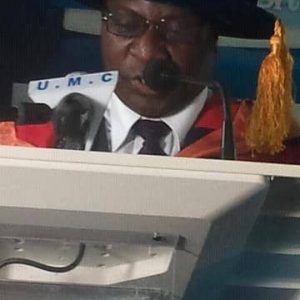
Professor G.O. Adeyemi delivered his inaugural Lecture
Tittle: Engineering Geology, the Big Heart for Structures and the Environment on 27 February 2013 at the University of Ibadan.
16
Aug, 2022
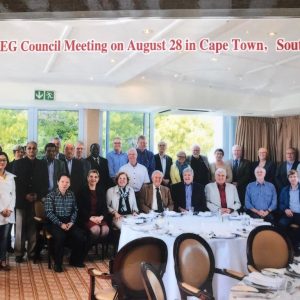
2016 IAEG Council Meeting on August 28 in Cape Town, South Africa.
In the year 2016, I was at the Cape town, South Africa to attend the International Association for Engineering Geology and the Environment (IAEG) Council Meeting.
16
Aug, 2022
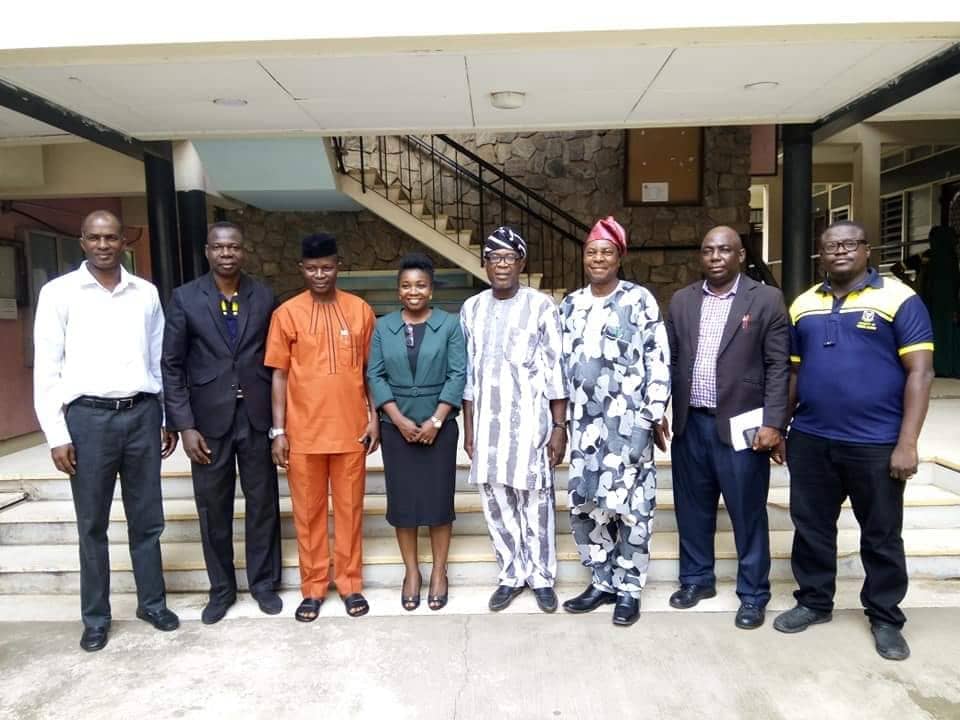
About Professor Gabriel Oladapo Adeyemi
MY BRIEF PROFILE
I have been a Professor of Environmental and Engineering Geology since 2007 at the University of Ibadan.
The tools for my research are:
- Petrographic studies of rocks.
- Mineralogical, geochemical and geotechnical studies of Lateritic Soils.
- Surface geophysical surveys in generating subsurface models.
- In-situ geotechnical investigations.
I have made substantial contributions to knowledge in the following areas:
- Highway geotechnical studies.
- Preconstruction investigations for buildings, roads and dams.
- Environmental impact assessment of exploration and exploitation of tar sands.
- Evaluation of naturally occurring construction materials.
- Evaluation of probable waste disposal sites.
- Mechanical and Chemical stabilization of lateritic soils.
My research activities have resulted in supervision of many Bachelors of Science and Masters of Science dissertations and 16 Doctor of Philosophy theses.
Although my main areas of research are Environmental and Engineering Geology, I have also supervised projects and theses in Hydrogeology, Environmental Petroleum Geology, Hydro Geophysics and Environmental Engineering Geology.
Prominent among the innovations in my researches are
- The use of percentages by volume (instead of weight) of stabilizers for improving engineering properties of soils. This approach is easy to apply at sites.
- Use of Lateritic soils of better geotechnical properties to stabilize other lateritic soils.
- Use of termite reworked soils for stabilization of lateritic soils from both Basement Complex and Sedimentary terrains of Nigeria.
- Incorporation of permeability determination in the evaluation of highway subgrade and sub-base soils.
- Use of statistical methods to determine which of anthropogenic and geogenic factors has stronger influence on the chemical composition of shallow groundwater.
Administratively, I was Head of Department of Earth Sciences, Ogun State University, Acting Head of Geology Department and Director of General Studies, University of Ibadan.
I have taught and practiced Geotechnics and related disciplines for over forty years. Specifically, I have been preconstruction investigations for many buildings, flexible highway pavements and dams in Nigeria.
Professionally, I am a Fellow of the Nigeria Association for Engineering Geology and the Environment, a member of the Deep Foundations, Institute of the U.S.A, an affiliate member American association of civil engineers and an Associate Member of the Nigerian Society of Engineers.
15
Jun, 2015
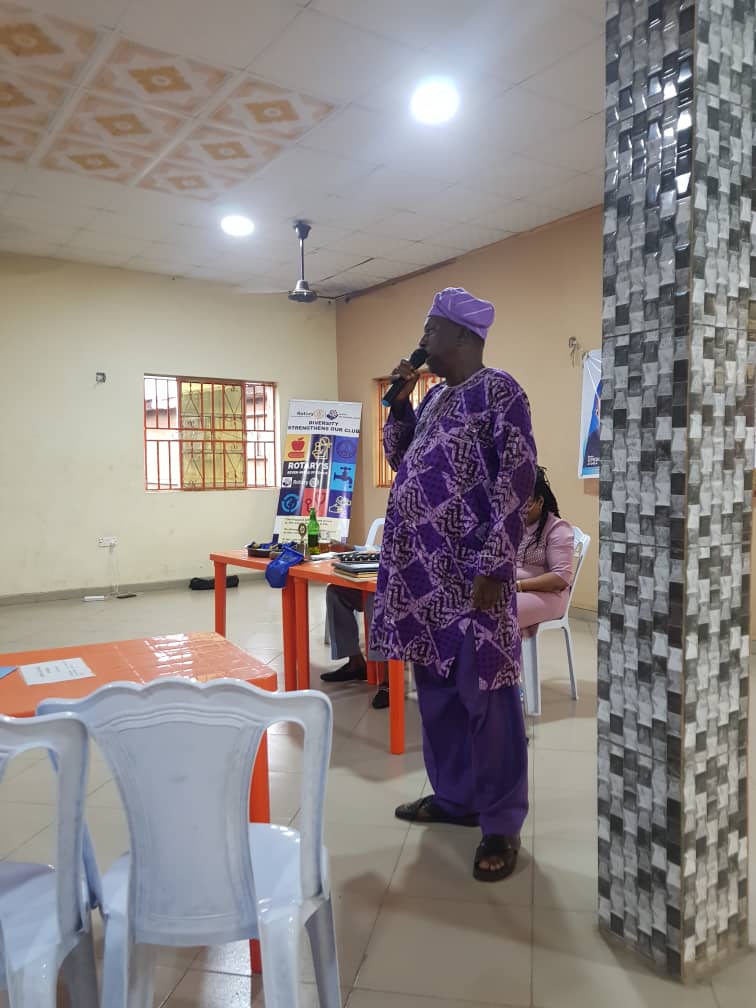
SAFE DISPOSAL OF SOLID WASTE
BY
Rotarian ( Prof) Gabriel O. Adeyemi FNMGS, FNAEGE, FNAH, AFF.ASCE, AMNSE.
Department of Geology, University of Ibadan.
Introduction: Rapid population growth and increased industrialization often led to generation of huge volume of waste in many part of Nigeria. The waste is disposed indiscriminately. This practice has detrimental impact on the environment. The odour that emerges can pose health problems while the environment often wears bad look. Heaps of waste can impede easy flow of rain water while waste may find its way to river channels.The resultant increase in volume of the content of river channels often results in the flooding of the environment. Structures such as buildings and road pavements can be destroyed. Besides, aquatic life can be endangered.
Government effort
Governments do provide waste disposal containers where Solid waste is loaded into trucks for onward haulage to landfill sites. However, such sites are seldom subjected to geoscientific and engineering investigations for their suitability or otherwise as waste disposal sites.
Investigation of proposed waste disposal site
Prior to investigating a site for its suitability or otherwise for disposal of solid waste, it must satisfy certain requirements.
(i) It must be remote from major highways, rivers and habitable areas.
(ii)The topography should be fairly flat.
The investigation proper is highly multidisciplinary and comprehensive it starts with the study of the geology of the area.
Surface geophysical surveys can furnish information about the subsurface with special emphasis on the thickness of the overburden (availability of volume for the construction of waste) and groundwater condition. Digging of trial pits and / or sinking of boreholes often furnish information on both geological and Geotechnical engineering properties of subsurface soils and rocks, and the hydrogeology of the location.
Results of in-situ (Site) and Laboratory tests can help in generating the model of the proposed site. The generated model should be similar to the standard model of a sanitary landfill. Prominent among which are that the base of the landfill should be impervious (permeability coefficient of a compacted silty clay that should be less than or equal to 1× 10⁻⁹ m/sec). The base should also be well above the water table. Recommendations should also be made for construction of the landfill such as in-situ compaction and possible use of artificial seals that can prevent seepage of leachate (Liquid component of solid waste)
Monitoring of an active Landfill
It is important to monitor the lateral influence of leachate from a landfill site. Mapping of Pollution plume can help in demarcating the areal influence with a view to determining locations that are safe for digging of water wells and boreholes. The study involves use of geophysical and geochemical methods.
Waste to Wealth
Waste can be converted to organic fertilizers which Lagos State waste management Authority has been exporting to Countries like Ghana. Electricity and gas can also be generated from recycling of solid waste. Scientific Study of an abandoned land-fill site can indicate depth of occurrence of Scrap metals which can be recycled.
Conclusions
Solid waste should be disposed in such a manner that it would have no detrimental impact on the environment.
Flooding and pollution of surface and groundwater should be prevented.
Integrated geoscientific and engineering methods should be utilized as practiced in developed countries of the world.